

Harry Kane’s lackluster performance in a major match raises a critical question: Can Bayern Munich count on him during pivotal moments? The recent Champions League clash against Arsenal ended in a disheartening 1-3 defeat, and Kane’s struggles on the pitch are becoming a pressing concern for the German giants.
Entering the game at the Emirates, Kane had the weight of expectation resting on him—not only because of the magnitude of the match but also due to memories of his electrifying performances in North London derbies while wearing a Tottenham jersey. However, rather than delivering an inspiring display, Kane faced an incredibly flat evening, significantly impacting Bayern’s overall performance.
From the outset, Arsenal’s defense—led by William Saliba and Cristhian Mosquera—effectively stifled Kane, giving him little to no room to operate. His touches were met with mounting pressure, forcing him to drop deep into midfield in search of the ball, often appearing closer to the center circle than to the opponent’s box. A player of Kane’s caliber should thrive in such games, but his constant retreat indicates Bayern is losing the essential cutting edge they desperately need.
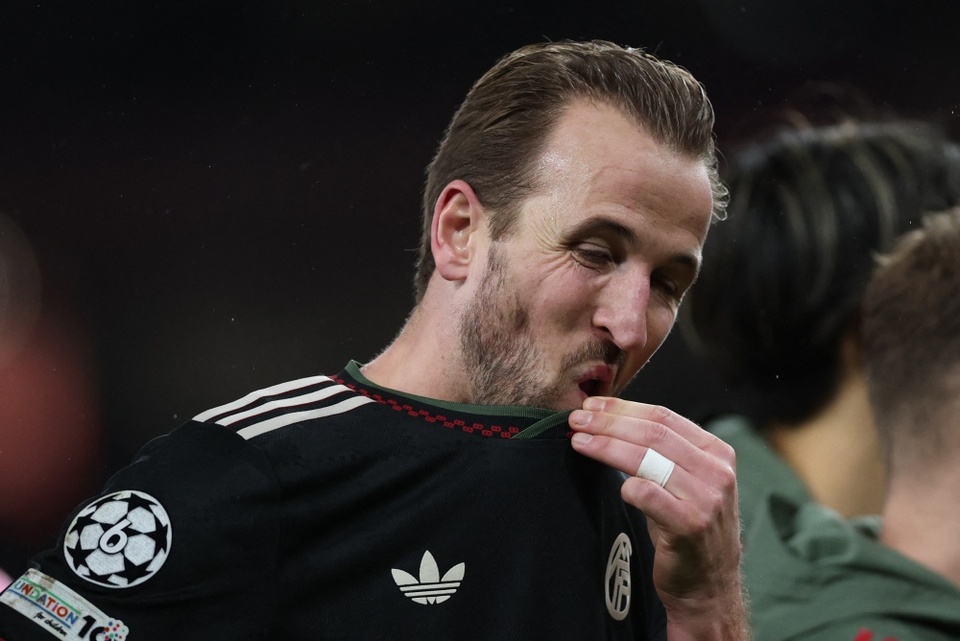
Despite boasting an impressive tally of 24 goals in 18 matches prior to this match, Kane’s failure to score in high-stakes encounters—failing to net against both Paris Saint-Germain and now Arsenal—suggests a worrying trend. It’s becoming more than a coincidence; it’s a stark signal that something is amiss.
Bayern recruited Kane explicitly to provide the finishing prowess needed to seal the deal in crucial matches, a responsibility that was once held by Robert Lewandowski. Yet the underwhelming showing against Arsenal raises the urgent question: Does Kane truly offer what Bayern requires in these high-pressure situations?
While Kane has racked up impressive goals against lesser opponents or during matches where Bayern dominates, he struggles significantly against elite teams. Moreover, it’s unfair to place the blame solely on him; Bayern as a whole lacked the creativity to supply him with adequate service. They showed a lack of depth on the flanks and failed to produce the incisive passing necessary to dismantle Arsenal’s stubborn defense. A €100 million striker is expected to make a difference in challenging circumstances, yet Kane’s influence was almost nonexistent.
The real issue transcends mere goal statistics. There’s an unsettling feeling that Kane is lagging behind in the fast-paced world of top-level football. He’s no longer winning his duels convincingly nor is he able to create confusion among defenders with his movement.
When in possession, Kane has also displayed a concerning lack of sharpness, prompting Bayern to contemplate: is this merely a rough patch, or is it indicative of deeper struggles against Europe’s elite defenders?
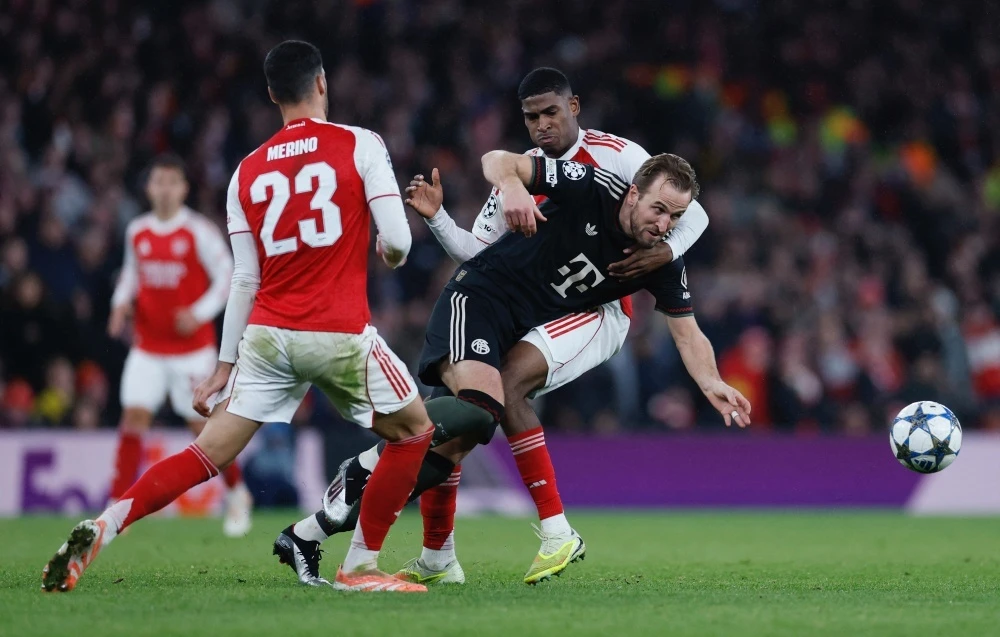
The Champions League represents the ultimate measure of Bayern’s aspirations. They did not sign Kane merely to dominate the Bundesliga; they brought him in to triumph over elite clubs like Arsenal, PSG, and Real Madrid. If Kane continues to falter in these crucial fixtures, Bayern could face a severe crisis as the season approaches its climax.
While Kane has enjoyed a terrific season thus far, Bayern expects more. They need him to be the decisive factor during the season’s pivotal moments and to prove his status as one of the world’s top strikers—not just a prolific scorer against average teams.
Bayern must take immediate action to help Kane regain his rhythm. Otherwise, the course of their season may very well be dictated by the silence of the striker they hoped would be their savior.