

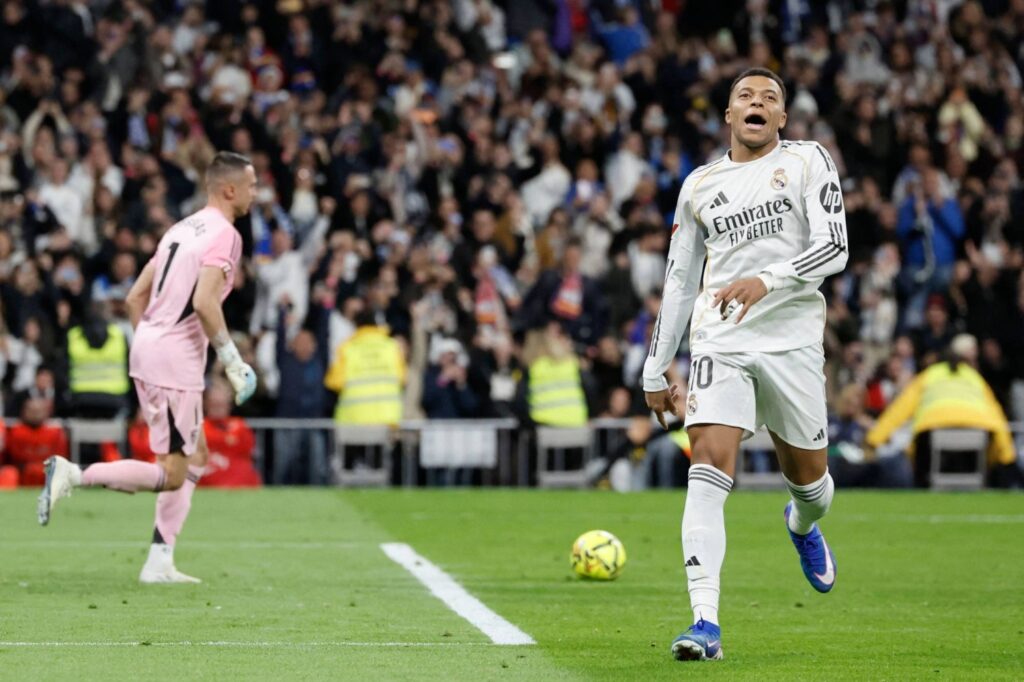
The Bernabéu continues to celebrate victories, yet beneath the surface, Xabi Alonso’s Real Madrid appears lost within the very structure they are trying to build.
A False Sense of Security
Three consecutive wins cannot mask the unease surrounding the team. A polished league table is no longer a convincing shield for a side that seems to be losing its identity day by day. Under Alonso, Madrid’s football feels both exhausting and uncertain. This is not a temporary dip in form, but rather the outcome of intertwined problems: ineffective pressing, poor marking, and a fragile defensive organization.
The Sevilla Match as a Snapshot
Against Sevilla, Madrid kept a clean sheet but bled structurally. The opponent circulated the ball freely from the back, exploiting gaps with ease. Courtois once again acted as the savior, the painkiller Madrid has relied on for years. Yet painkillers only hide symptoms; they never cure the disease.
The root lies in pressing. Madrid still pushes high, still charges forward, but the pressure lacks coordination. The front line presses half-heartedly, midfielders fail to close spaces, and defenders are left exposed in imbalance. This is “fake pressing,” allowing rivals to escape with just two or three passes.

Stars Who Shine Only With the Ball
Kylian Mbappé and Vinícius Jr. embody this disconnect. Brilliant in possession, nearly invisible without it. When they opt out of defensive duties, Madrid’s structure collapses. Distances between lines stretch dangerously. Tchouaméni and Arda Güler cannot cover the midfield alone, leaving Rüdiger and Huijsen exposed to vast spaces.
Sevilla exploited this systematically. With three center-backs and two holding midfielders, they bypassed Madrid’s pressure. Passing lanes on the wings and through the middle were always available. Sánchez and Romero repeatedly infiltrated between lines, unmarked and unchecked.
Defensive Chaos
Once Sevilla broke the first pressing layer, Madrid retreated chaotically. Some players dropped back, others stood still, and cover arrived late. Rüdiger was often forced into one-on-one duels in wide areas—far from his strength. Huijsen, inexperienced, was easily drawn out of position. The gap between center-backs widened, while the midfield shield thinned to paper.
Bad Habits Becoming Routine
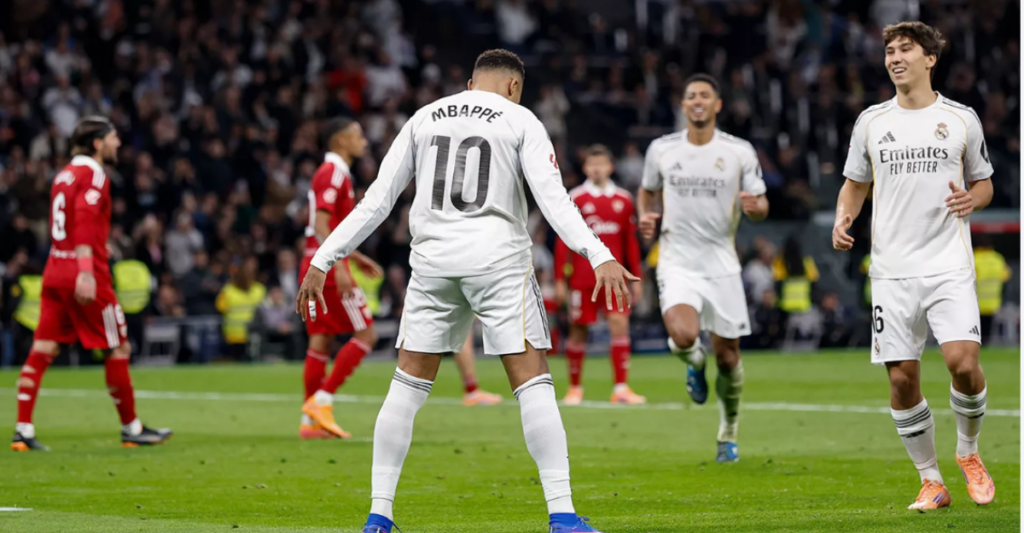
This is not an isolated incident. In their last five matches, Madrid averaged only five high interceptions, a sharp decline from earlier in the season. As pressing weakens, so too does control, rhythm, and confidence.
Alonso once spoke of a revolution: a calmer, more controlled Madrid, less dependent on individual flair. Yet reality is the opposite. The team is neither intense enough to press high nor solid enough to defend deep. They hover dangerously between extremes, a no-man’s-land of tactical uncertainty.
Attitude and Cohesion
The issue is not just tactical but mental. Madrid does not press as a unit. They do not defend as a block. Each player moves to a different rhythm. Mbappé and Vinícius conserve energy for attacks, midfielders scramble to patch holes, defenders endure the consequences. Such a fractured collective cannot sustain stability, no matter the individual talent.
A Crossroads for Madrid
The club now faces a turning point. They can continue relying on Courtois and isolated brilliance, or confront the deeper problem head-on. Pressing must involve everyone. Marking must begin from the front line. Structure must outweigh ego.
The Bernabéu has grown accustomed to late comebacks and dramatic turnarounds. But football does not always grant miracles. When “artificial pressure” becomes habit, the day Madrid pays the price is only a matter of time.