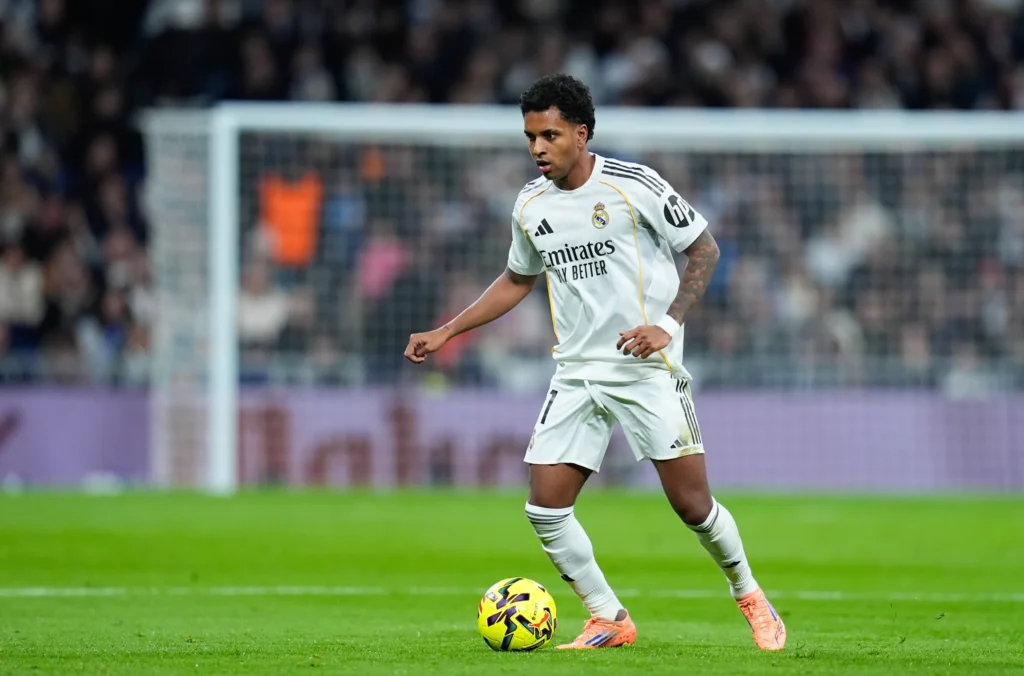

Sometimes survival in football isn’t about brilliance—it’s about accepting reality and adapting to it.
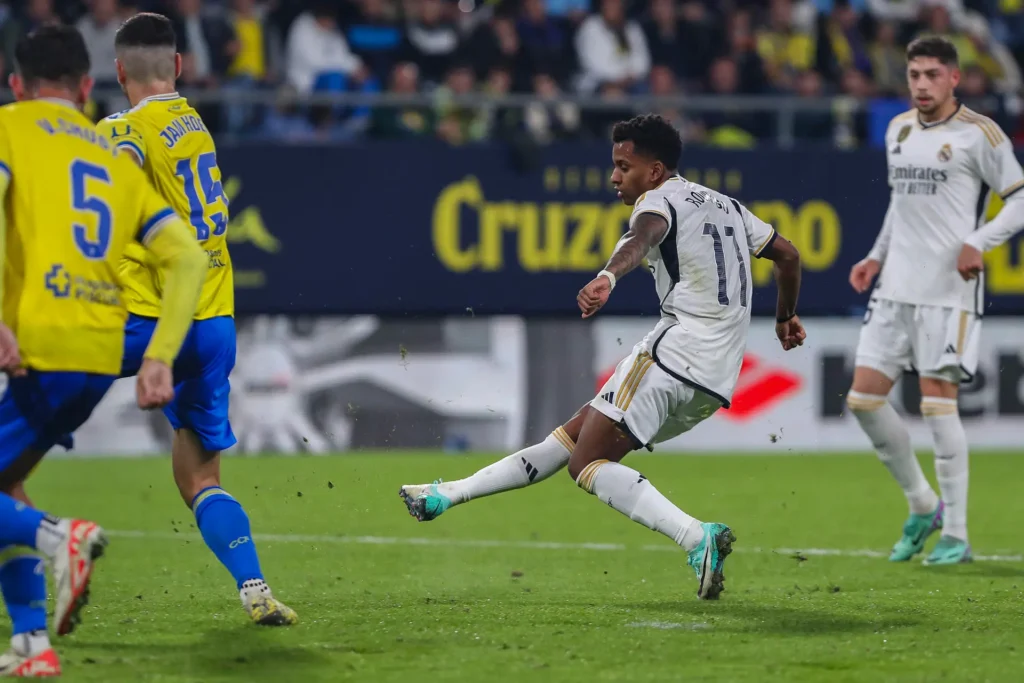
Rodrygo’s decision to return to the right wing has not only revived his form but also opened a path to survival at Real Madrid under Xabi Alonso.
The 2-0 victory over Sevilla in La Liga’s 17th round allowed Madrid to close 2025 with less tension, even though fluidity and consistency remain issues. Yet amid the uncertainty, Alonso had reasons to smile: Mbappé kept scoring, Courtois stayed reliable, and most surprisingly, Rodrygo re-emerged in a way few expected. His comeback wasn’t marked by loud demands or declarations, but by a quiet choice—to embrace the right flank.
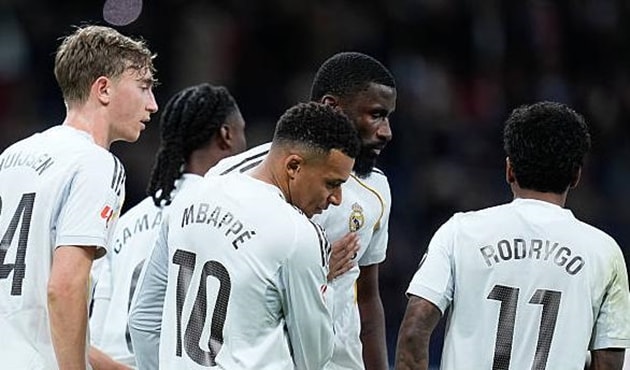
Last season, Rodrygo looked like a shadow of himself. His own admissions of mental struggles revealed that his decline was more than just poor form; it was physical and psychological. Under Alonso, he had a chance at the FIFA Club World Cup but quickly slipped out of the starting lineup. The numbers told the story: only 769 minutes played, with more than a third coming in the last four matches. For much of the campaign, he was sidelined in both La Liga and the Champions League, seemingly becoming the forgotten man in a squad dominated by Mbappé and Vinícius.
The turning point came against Manchester City. Madrid lost, but Rodrygo scored, ending a months-long drought. That goal was liberating—not just statistically, but mentally. Confidence returned, pressure eased, and form followed. He scored again versus Alavés, and against Sevilla he didn’t find the net but was the most creative attacker: assisting Bellingham’s opener and winning the penalty that Mbappé converted. It was the performance of a player who knows time is running out to prove himself.
Rodrygo’s revival also reflects Alonso’s tactical adjustments. Initially, Alonso allowed him to play on the left when Vinícius was absent. But reality forced change: Vinícius is untouchable on the left, Mbappé needs central space, and Rodrygo had to carve out his own role. Ironically, the right wing—once a position he disliked—became his lifeline. It was also the place where he had delivered some of his greatest Champions League moments. By accepting this, he not only balanced the team but solved a personnel puzzle for Alonso.
The coach from Tolosa didn’t hide his satisfaction, praising Rodrygo’s balance, tight-space coordination, and contributions both on and off the ball. These weren’t empty compliments. In a squad full of stars, Alonso’s public endorsement showed Rodrygo’s status had genuinely shifted.
Behind this resurgence lies Carlo Ancelotti’s influence. During Rodrygo’s darkest period, Ancelotti protected him, prioritizing the human side over results. That empathy kept him from breaking completely. Meeting Ancelotti again with Brazil gave Rodrygo the emotional anchor he needed.
The right wing may not be Rodrygo’s dream, but it is now the place where he survives—and thrives. His goals and assists with the Seleção in friendlies signal readiness for the big stage once more. His rebirth isn’t magic; it’s the product of humility, lowered ego, and choosing the path that ensures survival at Madrid. In a club where competition is relentless, adaptability can matter more than raw talent.
The right flank may not be the role he once desired, but today it is the role that keeps him alive—and even flourishing. For Real Madrid, it offers a new attacking option. For Rodrygo, it is a clear statement: he is still here, and far from finished.